Rural Learning
The classroom that the rains kept closing
For six years, attendance at Kirambo school collapsed every second term. The explanation was eleven weeks of river, and nobody had thought to write it down.
The register at Kirambo community school goes back to 1994, and for most of that time nobody read it. It was kept because keeping it was required, filed in a cupboard behind the head teacher's desk, and consulted only when a district officer asked for a total.
When Fieldstone's first survey team asked to look at the registers in 2007, they were expecting to find a story about enrolment. Rural education data usually is. What they found instead was that enrolment at Kirambo had been consistently, unremarkably good for a decade, and that between roughly the second week of April and the last week of June, somewhere between a third and a half of the children on the register were not in the room.
A pattern that repeats and nobody names
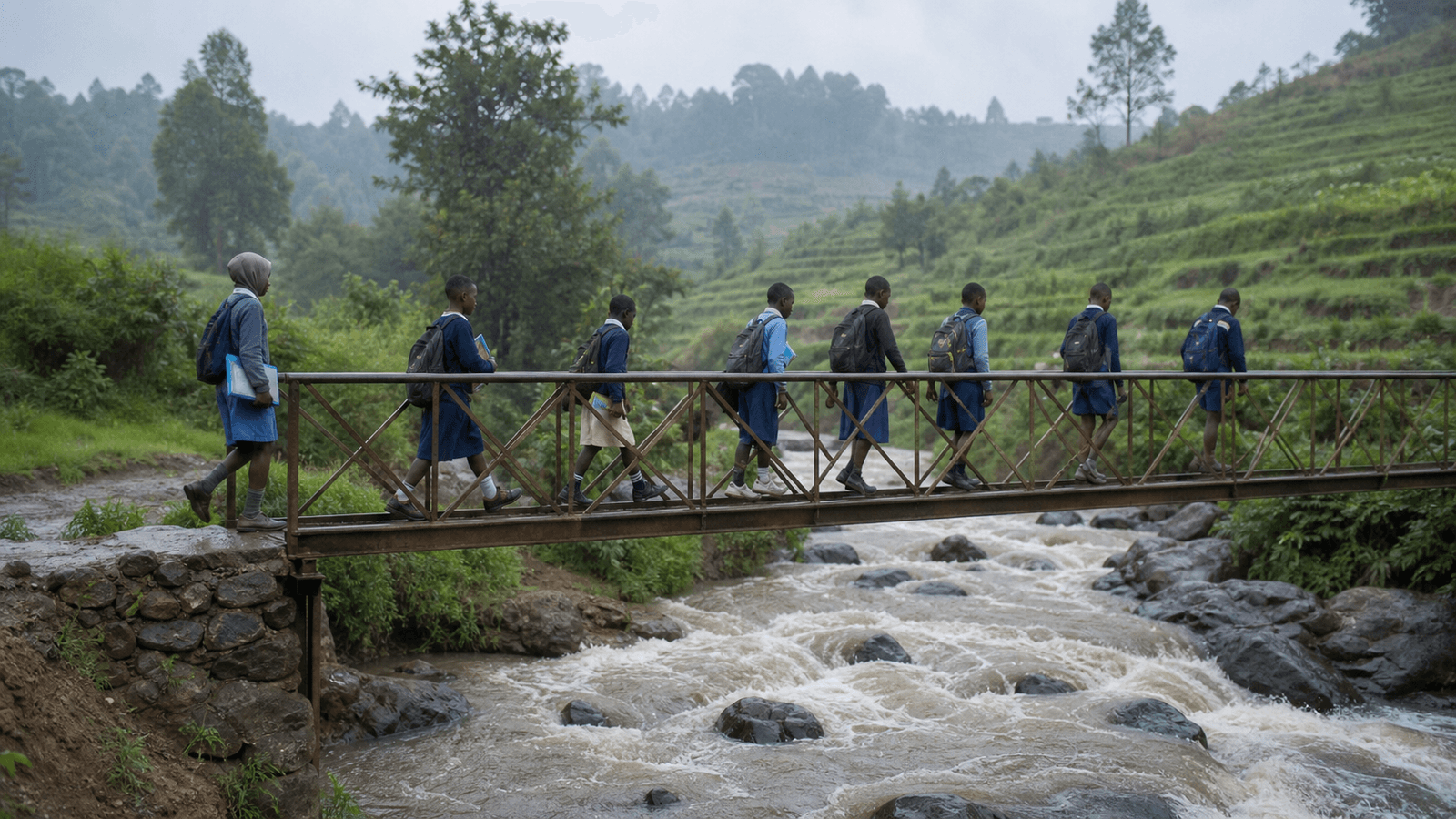
The Ngeta river runs between Kirambo and the four settlements that send it the largest share of its pupils. For most of the year it is a wide, shallow, unremarkable crossing. In the long rains it is not.
Every adult in the valley knew this. It had never appeared in a single education report, because education reports are about education, and a river is not.
They kept sending people to look at our teaching. The teaching was fine. The children were on the other side of the water.
What eleven weeks costs
Fieldstone's second survey year attempted to quantify it. Children on the far bank lost, on average, twenty-nine teaching days a year. Over a seven-year primary cycle, that is more than a full academic year. The effect was not evenly distributed: it fell almost entirely on the youngest pupils, whose families would not send them unaccompanied, and on girls, who were more often kept back to help when the crossing was uncertain.
- teaching days lost per pupil, per year
- 29teaching days lost per pupil, per year
- weeks the crossing is unreliable
- 11weeks the crossing is unreliable
- settlements on the far bank
- 4settlements on the far bank
- school years lost across a primary cycle
- 1.3school years lost across a primary cycle
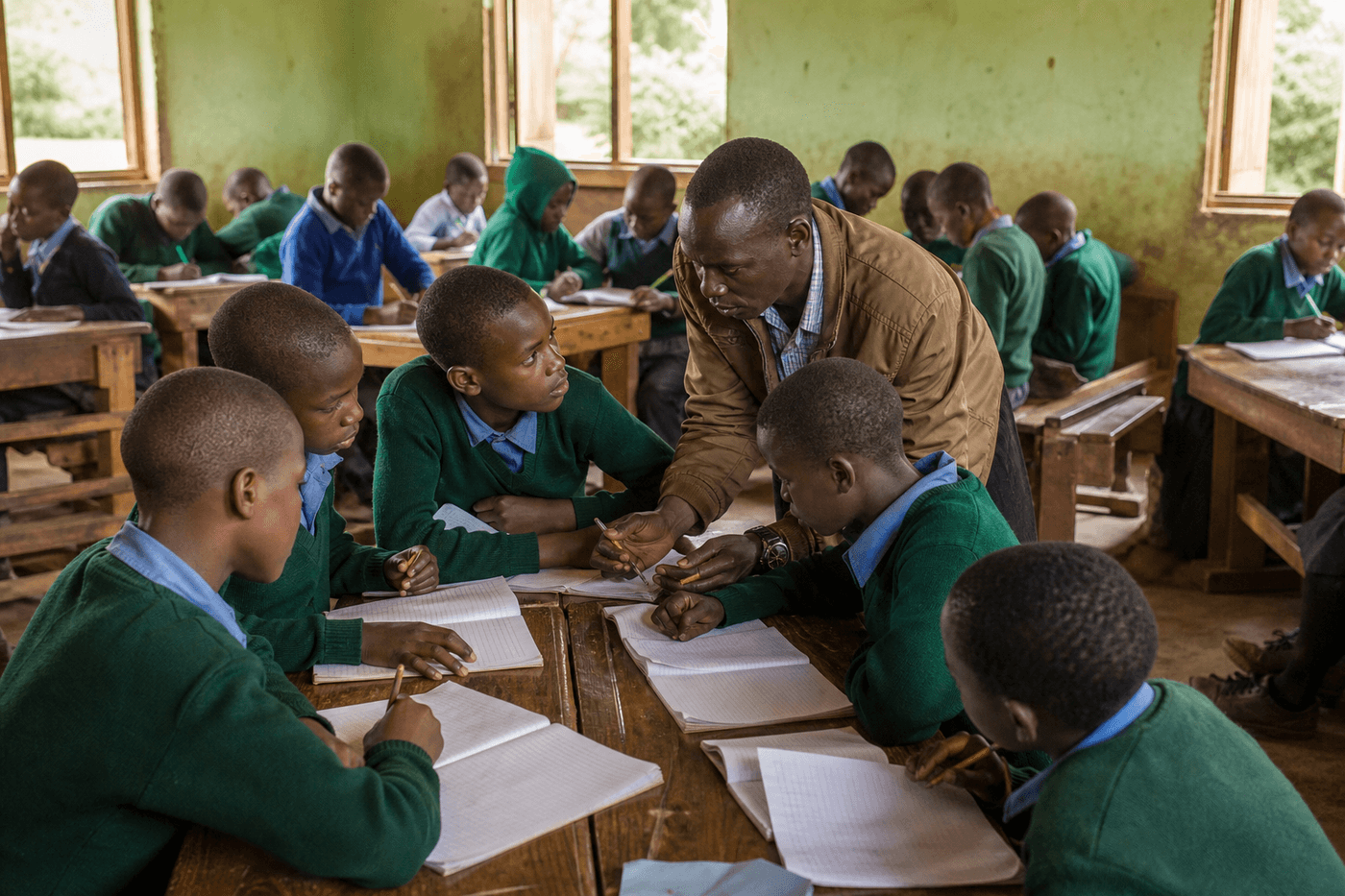
The footbridge that now spans the Ngeta was commissioned in 2011 and paid for out of an education budget, which required an argument with two funders and a rewrite of Fieldstone's own programme definitions. It cost €18,400. In the four years after it opened, second-term attendance at Kirambo rose from 61% to 94% and has not fallen below 90% since.
The uncomfortable part
It is tempting to tell this as a story about insight. It is more honestly a story about a question that had not been asked, in a register that had been sitting in a cupboard for thirteen years, in a valley where every single adult already knew the answer.
Fieldstone's method — begin with a community assembly, spend the first year listening rather than proposing — exists because of the Ngeta. Not as a philosophy. As a correction.