Rural Learning
The classroom that the rains kept closing
Sixteen years of attendance data from a single Kenyan district, and the unglamorous obstacle hiding inside all of it.
Nadia BelhajNyakura Highlands, Kenya9 min read
Fieldstone Collective
Programme · running since 2009
A rural school does not fail for want of a building. It fails when the teacher leaves, when the rains close the road, and when the textbook arrives in a language the class has never spoken at home.
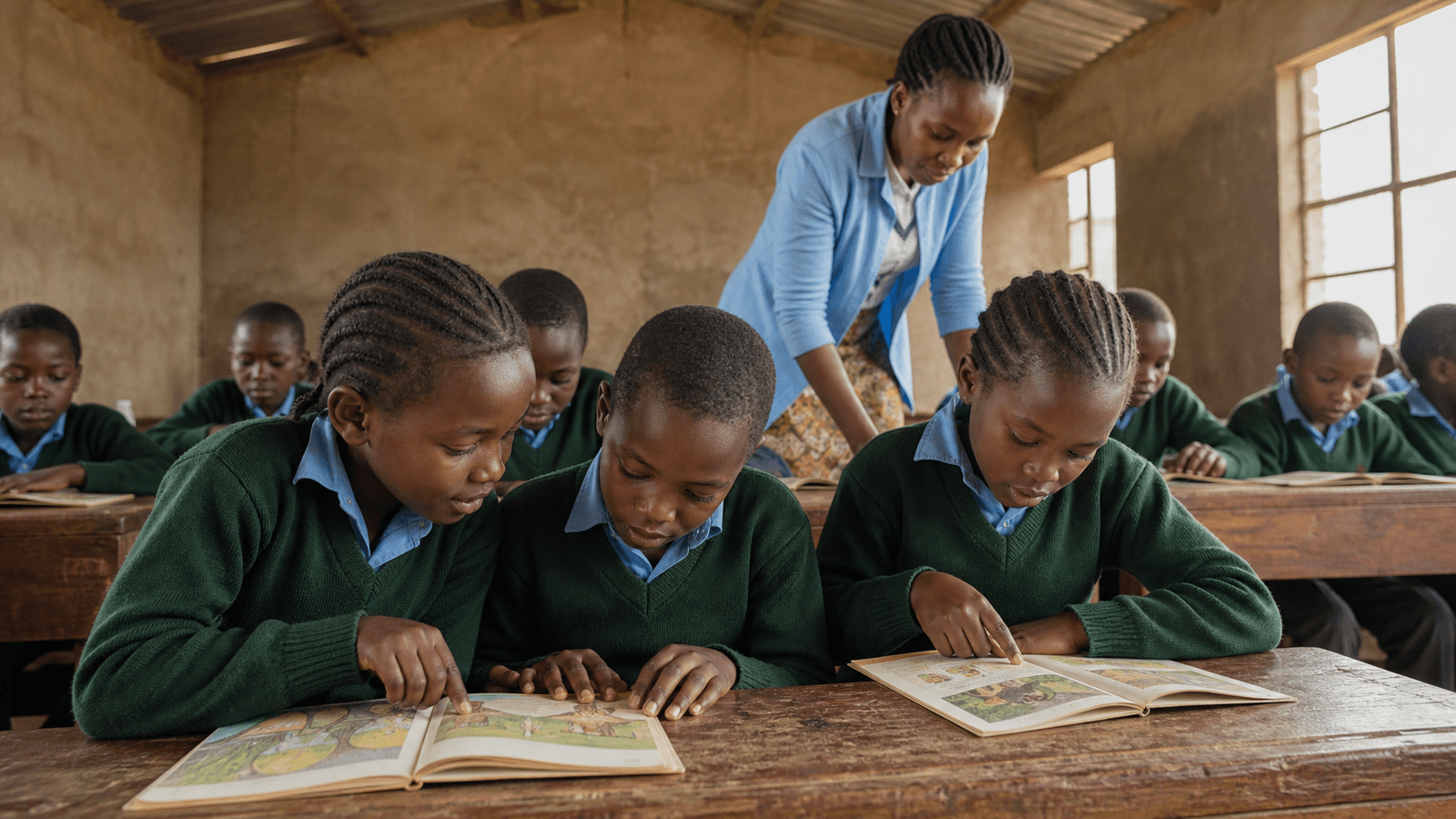
Fieldstone began with a survey rather than a plan. Over two years in the Nyakura Highlands, Amara Sesay and Tomás Renard recorded who was in class on a given morning and, more usefully, who was not. The pattern was not the one they expected. Enrolment was high. Attendance collapsed in the second term, recovered in the third, and collapsed again the following year in a different age group.
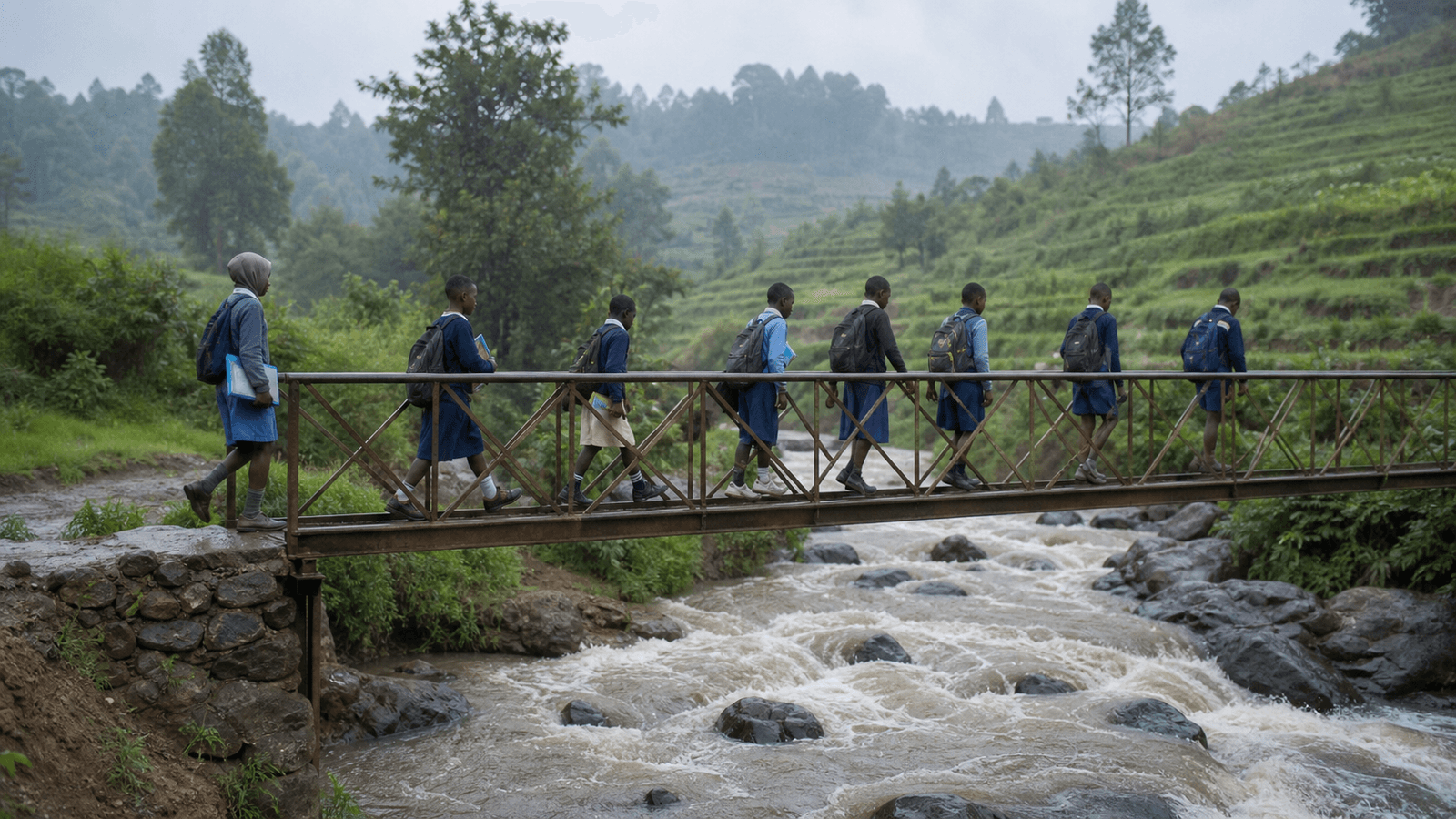
What the data described was not indifference to education. It described a set of small, specific obstacles — a teacher transferred without replacement, a bridge out for eleven weeks, a family that could not afford a second uniform — each of which was individually solvable and none of which was being solved by anyone whose job it was to build schools.
Rural Learning spends the largest share of its budget on people. Teacher salary supplements and the fellowship account for just over half of programme spend, materials development for a fifth, and school governance support — the unglamorous work of helping a parent committee keep minutes, hold a budget, and challenge a district office — for most of the remainder.
We used to write to the district for a roof and wait two years. Now we hold the fund, and the argument with the district is about something more interesting.
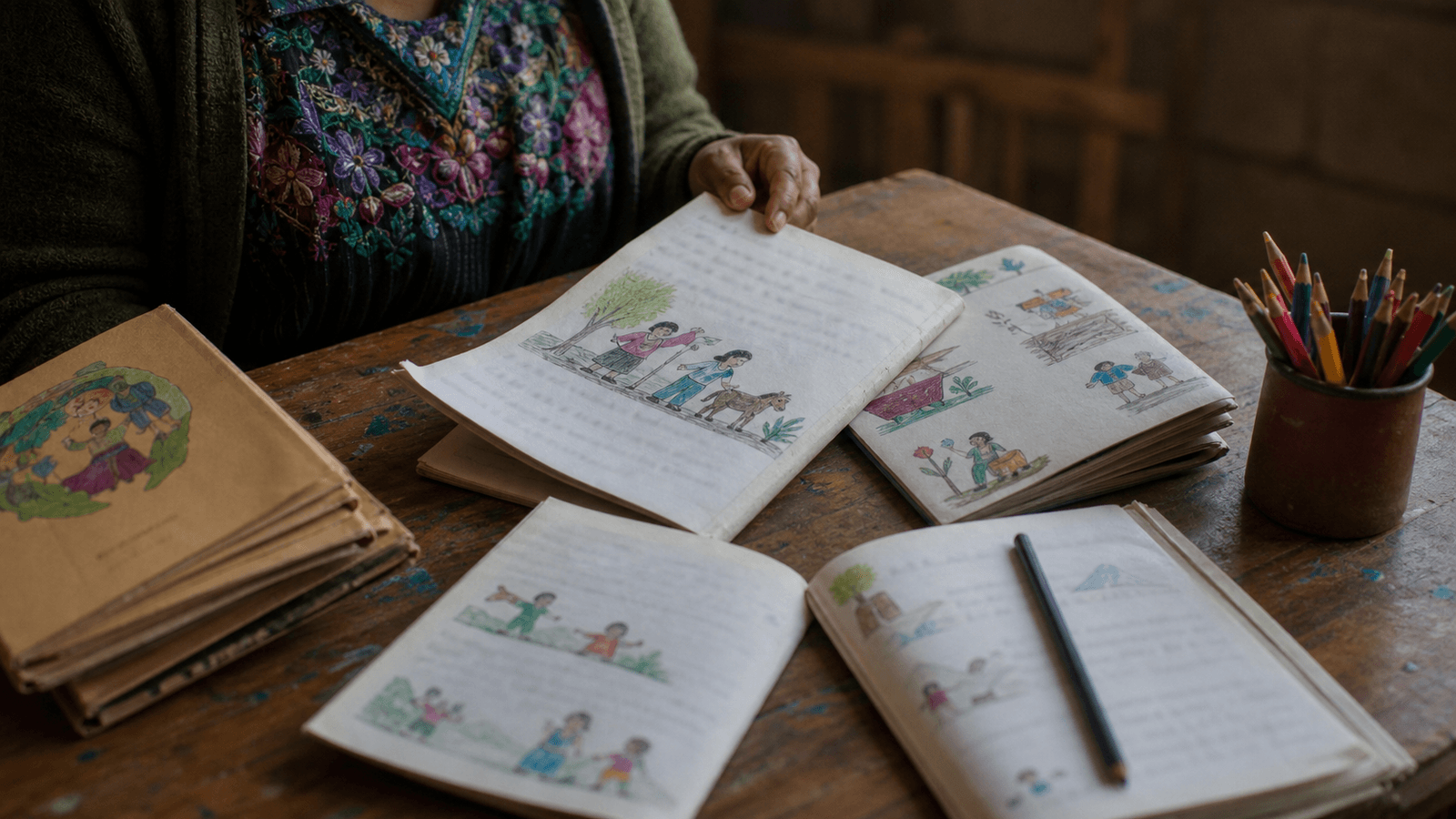
In the Vega Alta Ridge in Guatemala, the fellowship model transferred badly for its first three years. Teachers were recruited nationally and posted into communities where they did not speak the language of the playground, and retention fell to 34%. The programme was rebuilt around recruiting from within the ridge communities themselves, which cut the intake by half and raised five-year retention to 79%.
Limits
Published because an organisation that only describes its scope in terms of what it might do has not defined a scope.
We do not build or open new schools. We strengthen schools that district assemblies already run.
We do not operate above lower-secondary level, and we do not fund university scholarships.
We do not supply digital devices. Where connectivity and power are unreliable, they become a maintenance liability the school did not ask for.
Approach
Fieldstone does not open schools. It works with district education assemblies to strengthen the schools those assemblies already run — governance, teacher pay, materials, and the roof, roughly in that order of importance.
Teachers in the fellowship receive a salary supplement, a mentor, six residential weeks of training a year, and a five-year commitment. Retention is the whole point; a school with a new teacher every year is not a school.
We fund the writing, illustration, and printing of primers in the language spoken at home, and the transition into the national language of instruction from year four. This is slower and it works.
Where our attendance data points at a river crossing rather than a classroom, the Community Infrastructure programme is asked to look at it. Roughly a fifth of learning referrals become infrastructure work.
Where it runs
Kenyasince 2009
The district where Fieldstone began, and the only one where all sixteen years of attendance data exist in a single series.
Nepalsince 2015
Eleven settlements along a gorge, where the distance between a house and a classroom is measured in hours rather than kilometres.
Guatemalasince 2016
Twenty-two schools across a ridge where four languages are spoken and, until recently, one was taught.
Reporting
Rural Learning
Sixteen years of attendance data from a single Kenyan district, and the unglamorous obstacle hiding inside all of it.
Nadia BelhajNyakura Highlands, Kenya9 min read
Rural Learning
Four languages are spoken along the ridge. Until 2019, one was taught — and retention among our own fellows had fallen to 34%.
Tomás RenardVega Alta Ridge, Guatemala7 min read