Rural Learning
Teaching in the language the children think in
Fieldstone's teaching fellowship failed on the Vega Alta Ridge for three years. Rebuilding it meant halving the intake.
I want to describe a failure that was entirely ours, because the way it is usually described in our sector — as a cultural or contextual challenge — obscures a decision that specific people, including me, made badly.
Fieldstone's teaching fellowship worked in Kenya. When we opened work on the Vega Alta Ridge in 2016, we transferred it more or less unchanged: recruit strong candidates, pay a salary supplement, provide mentoring and six residential weeks of training a year, ask for a five-year commitment.
Thirty-four per cent
By 2019, five-year retention among ridge fellows was 34%. In Nyakura it was 88%. The teaching was not worse. The training was identical. The salary supplement was, adjusted, slightly more generous.
What differed was that we had recruited nationally. Our fellows were, overwhelmingly, excellent teachers from Guatemala City and the larger departmental towns, posted into ridge communities where the language of the playground was one they did not speak. They could teach a lesson. They could not follow an argument between two eight-year-olds, reassure a parent at the door, or understand what a child was actually asking.
I was a good teacher for three hours a day and a stranger for the rest of it. Nobody can do that for five years.
Halving the intake
The rebuild had one substantive change: fellows are recruited from the ridge communities themselves. This immediately halved the number of candidates who met our original academic criteria, so the criteria changed too — a longer fellowship, more foundational training in the first two years, and a mentoring load that costs roughly 40% more per teacher.
- Intake fell from 48 to 23 fellows a year.
- Cost per fellow rose by approximately 40%.
- Five-year retention rose from 34% to 79%.
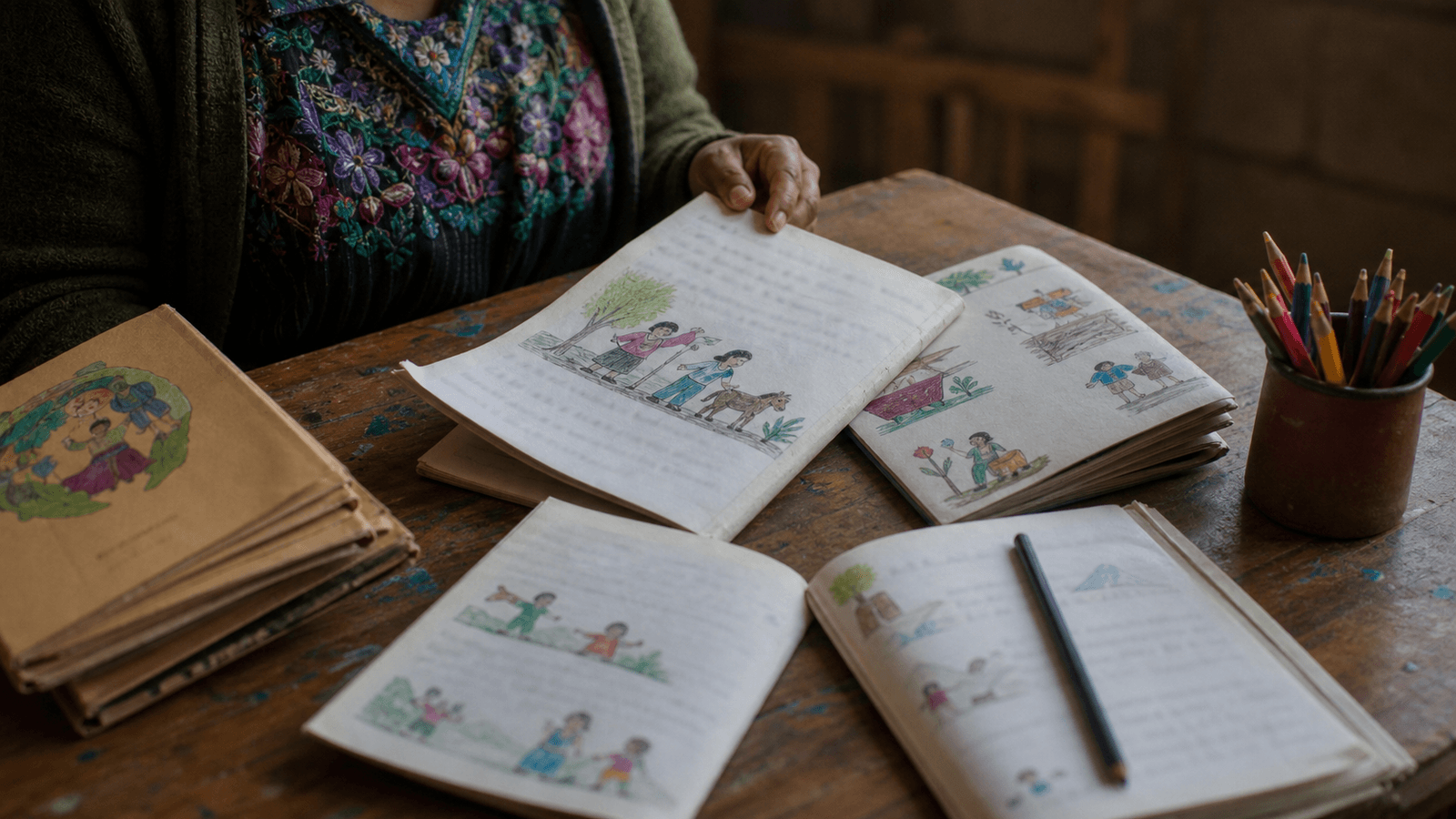
- Fourteen fellows have since written and illustrated the mother-tongue primers now used across the ridge.
The primers are the part I did not anticipate. We had budgeted to commission materials from a publisher in the capital. Instead they were written by teachers who grew up speaking the languages they are printed in, and they are licensed openly, so that district offices can reprint them without involving us at all.